Behind the Brass Grille: Why Britain’s Cinema Payboxes Are Worth Saving
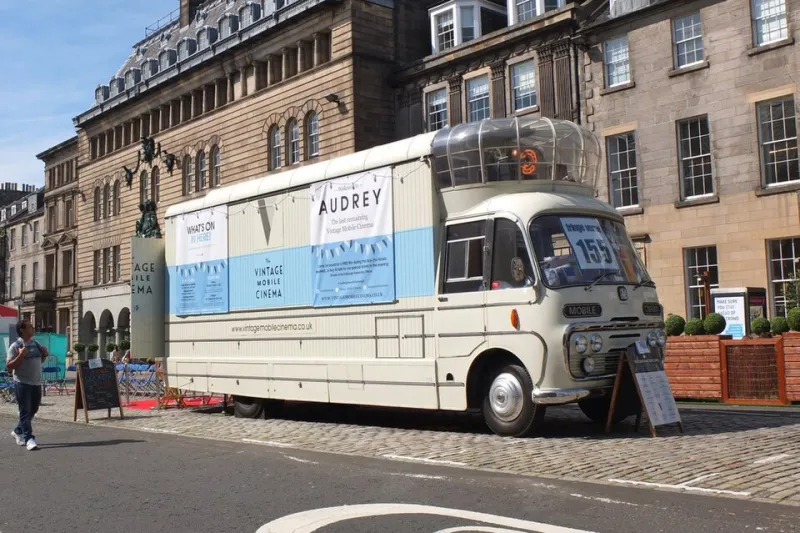
Photo: Jim Barton , CC BY-SA 2.0, via Wikimedia Commons
The threshold with a counter
You know the scene even if you never stood in it. A wet Saturday in a British high street, the canopy holding off the worst of the weather, and a queue that starts under the poster cases and curls towards a small lit window. Behind the glass: a face, a till, a rack of tickets, and a brass grille that has been polished by decades of hands asking for two in the circle.
The paybox — the proper old word for it — is one of the most overlooked bits of cinema heritage we have. We fuss, rightly, about screens and seats, curtains and organs. But the box office is where the picturehouse meets the pavement. It is the first performance of the evening, and the queue is the audience.
In 2026, as more restored cinemas reopen with online booking and contactless readers, the paybox is often the first thing to go. Not always out of malice. Sometimes it is simply in the way of a new foyer layout, or it looks tired next to fresh paint. But once the counter is ripped out and the grille goes into a skip, a small piece of social history goes with it.
What the fittings remember
The paybox is an architectural object as much as a piece of furniture. The best ones are beautifully practical: a counter at the right height for passing a tenner and a ticket, a shelf for a handbag, a little brass grille for security and ventilation, a change tray worn smooth at the centre. Behind the glass, there is usually a ticket rack — rows of pre-printed tickets, a date stamp, perhaps a ledger — and a cramped bit of floor where the cashier spent whole evenings in a hot little box while the film upstairs did its thing.
That little box has stories. Volunteers who worked in payboxes remember the queues more than the films. The regular who asked for the same seat. The couple who met in the queue for a Saturday night showing and came back every year. The child sent up to the window with a note and exact change. The rush at ten to seven, when the pavement seemed to hold half the town and the cashier had to be calm, quick and polite all at once.
Payboxes were also workplaces: early starts, late finishes, cash to count, floats to check, complaints about the heating. Oral histories from cinema staff often circle back to that window. It was the place where the public met the building, and where a lot of the building’s character was quietly made.
The retrofit risk
The pressure to modernise is real. A card reader on the counter is not the enemy. Neither is a screen showing seat availability. The problem is the assumption that the old fittings have to go to make room for them. In too many refurbishments, a handsome timber counter is replaced by a grey desk, a brass grille is scrapped as a fire risk, and the ticket rack is binned because nobody knows what it was for.
Before any foyer work begins, the paybox should be surveyed like any other historic feature. Photograph it from every angle. Measure it. Note which bits are original and which are later additions. Look under the paint — that dark brown counter may once have been a warmer colour, and the brass grille may still be brass under a layer of gloss. Label the parts if they have to come out, and store them somewhere dry. A conservation officer or a local heritage group can usually advise on listed buildings and consent, but even in an unlisted cinema, a few hours of care can save a lifetime of material.
There is also the question of access. Old payboxes were not designed for wheelchairs or for people who need a lower counter. That is a genuine issue, and it should not be waved away. But it is usually possible to add an accessible serving point alongside the historic counter, or to adapt a section without destroying the whole. The aim is not to freeze the cinema in 1935. It is to let the old window do a new job without pretending it never existed.
A queue is heritage too
We should think beyond the counter. The queue itself has a shape: the canopy that sheltered it, the brass floor plates, the rope barriers, the pavement outside the poster cases. In some cinemas, the queue was so much part of the ritual that people knew exactly where to stand to avoid the drips. That is not trivia. It is how a building was used.
A restored picturehouse can interpret the paybox without turning it into a museum case. Keep the grille. Put the old ticket rack back on the wall. Let a volunteer tell a visitor what the change tray was for. If the counter cannot be used for every transaction, use it for something — programme sales, lost property, a friendly face at busy times. The point is to keep the threshold alive.
What to do before the skip arrives
If you are involved in a cinema refurbishment this year, here is the short version. Photograph the paybox before anyone touches it. Bag and tag the brass, the ticket rack, the change tray and any original drawer pulls. Do not paint over brass or strip original timber without advice. Record where things came from, not just what they are. Ask the contractor to set aside a corner for salvage rather than a skip. And talk to the people who worked the window — their memories will tell you which bits mattered.
The paybox is a little window that sold the dream. It deserves more than a shrug and a card reader screwed to a chipboard desk. Save the brass grille, and you save the place where the audience first said hello.