Counter Culture: The Small Cinema Kiosk That Keeps the Interval Alive
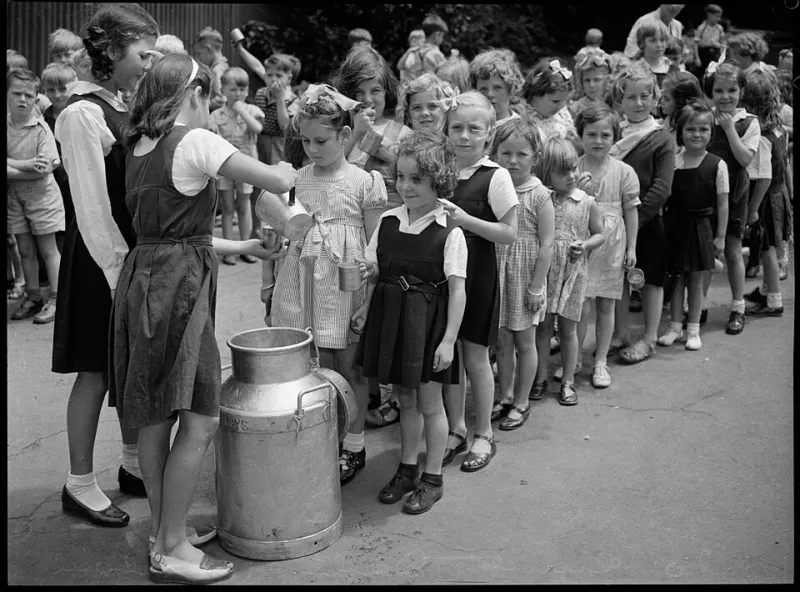
Photo: Calvert Jones, Public domain, via Wikimedia Commons
There is a moment in a good picturehouse when the film stops and the room does not quite settle. The lights come up halfway, the curtains twitch, and a low rustle moves through the rows. Someone near the back is already on their feet. Someone else is digging for change. And at the side of the auditorium, or out in the foyer, a small counter gets its own brief star turn.
The cinema kiosk is not usually listed in the same breath as the screen, the organ or the hand-painted canopy. It is a place for a tub of ice cream, a paper cone of sweets, a warm bottle of something orange. But spend an afternoon with people who remember their local cinema and the kiosk turns up again and again. Not as a side note, either. As part of the ritual.
The counter as a scene change
In the middle of the twentieth century, many British cinemas treated the interval as a proper break in proceedings. There was time for the usherette to come down the aisle with a tray, time for the foyer counter to do a brisk trade, time for the audience to stretch its legs and argue quietly about whether to stay for the second feature. The kiosk was the engine of that pause. It gave the interval a destination.
That is the thing restoration teams sometimes miss when they focus on seats, plasterwork and projection. A cinema can look magnificent and still feel a bit inert if there is nowhere to gather. The kiosk is one of the few places in the building designed for standing still and talking to strangers. It is a social fixture disguised as a retail one.
Art-deco counters, curved glass display cases, hand-lettered price boards, brass rails worn smooth at the edges: these are not just shop fittings. They are the furniture of the interval. They tell you how people moved through the building, where they queued, what they bought, and how quickly they had to get back to their seats. In a heritage setting, that is evidence.
What the tray actually did
For anyone who grew up with the usherette's tray, the memory is usually sensory rather than architectural. The choc-ice in its little wrapper. The Kia-Ora that was somehow always colder in memory than in life. The clink of coins. The awkwardness of passing money along a row. The way the lights stayed low enough that you could pretend you were not really buying anything at all.
The tray also did something subtler: it brought the cinema's smallest transaction into the auditorium. You did not have to leave the film entirely. The film paused, the room softened, and a small piece of commerce came to you. That is a very particular kind of British picturegoing, and it is worth preserving not because it was glamorous, but because it was ordinary in a way that people remember with surprising tenderness.
Restored venues cannot simply recreate that atmosphere by putting a freezer in the corner. The ritual depended on timing, staffing and a certain amount of theatre. An interval that is too short becomes a scrum. One that is too long loses the room. The old cinema managers knew this. They treated the interval as part of the programme, not a gap between adverts.
Restoration is a queue, not a counter
In 2026, several restored picturehouses are thinking again about kiosk provision. Some are bringing back interval service with volunteers working trays down the aisles. Others are reopening small counters that had been bricked up or turned into storage. The best examples are not trying to build a modern concessions stand in period dress. They are asking what the original counter did, where it sat, and how it fitted into the audience's route through the building.
That means practical questions. Is there space for a queue without blocking a fire exit? Can the counter frontage be repaired rather than replaced? Are there old photographs showing the original price board, the shelf height, the position of the till? Does the interval service need a trolley, a tray, a small team of people who know how to move through a row without blocking the screen?
There is also the question of what to sell. A restored cinema does not have to pretend it is 1954. But a choc-ice, a paper bag of sweets and a small glass of something cold can do more for the atmosphere than a long menu of branded snacks. The point is not nostalgia for its own sake. The point is a counter that feels like it belongs to the building, not to an airport concourse.
The 2026 interval test
A useful test for any restored cinema is simple: when the film stops, does the room come alive in the right way? Not a stampede, not a sulk, but a gentle shift. People turning to each other. A queue that forms without being announced. A child being allowed to choose a choc-ice. An older couple splitting something in half. The kiosk is usually at the centre of that picture.
In 2026, audiences are also more receptive to the interval than they have been for years. Repertory screenings, archive restorations and longer double bills give venues a natural reason to pause. A well-run interval can build community in a way that a straight-through screening cannot. It gives people a chance to talk about what they have just seen, or to brace themselves for what is coming. The counter is where that conversation starts.
Small counter, long memory
The kiosk is not the reason anyone falls in love with a cinema. The screen does that, or the building, or the feeling of sitting in the dark with a room full of strangers. But the kiosk is part of why they remember the night. It is where the interval became an event. It is where a choc-ice became a tradition. It is where the smallest transaction in the building left the largest impression.
So when the next restoration plan lands on the table, it is worth asking where the counter goes. Not as an afterthought. Not as a concession squeezed into the back of the foyer. As part of the show. Because a picturehouse without a proper kiosk is a bit like a cinema without an interval: it can still work, but it has lost a small, sweet piece of itself.