The Glow Before the Feature: Bringing Britain's Cinema Canopies Back to the Street
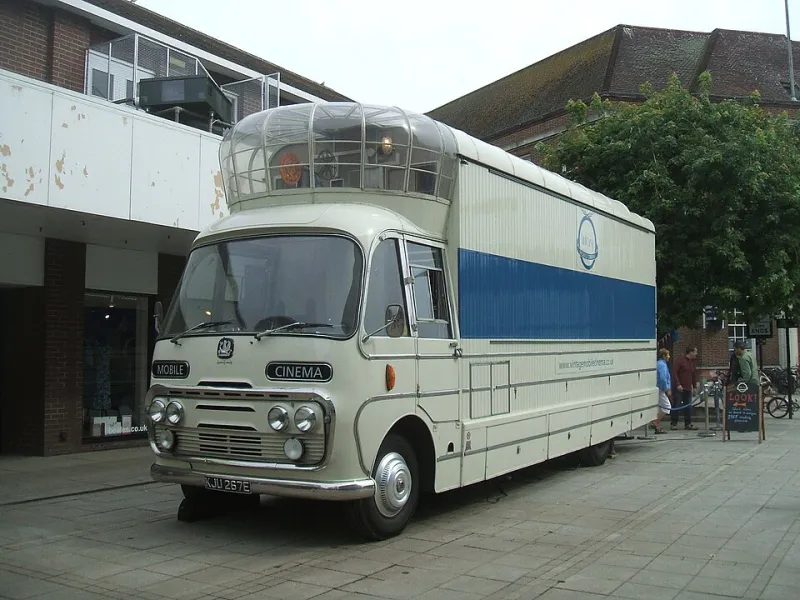
Photo: John M , CC BY-SA 2.0, via Wikimedia Commons
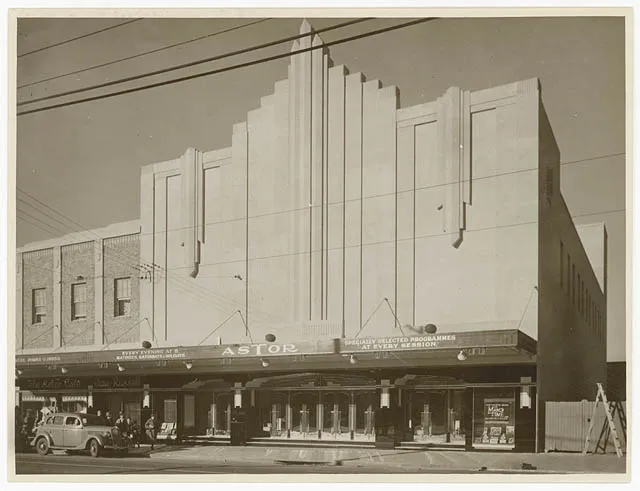
There's a particular kind of magic in walking towards a cinema on a filthy November evening and seeing the canopy already lit. The rain is coming sideways, the bus is late, your shoes are done for — and there it is: a slab of warm light hanging over the pavement, with the name of the place picked out in letters that buzz. You haven't bought a ticket yet. You haven't even seen the poster. But you've already been welcomed in.
That's the thing about cinema canopies and marquees. They do the greeting. They do the sheltering. They do the pointing-at-the-building-so-you-know-what-it-is. And yet, in restoration terms, they are almost always the last thing on the list and the first thing to be quietly value-engineered out.
The bit nobody budgets for
Spend an afternoon with any cinema preservation group and you'll hear the same story. The auditorium is the star. The plasterwork, the proscenium, the seats, the booth — these are the things people fundraise for, write bids about and photograph for the local paper. The canopy is the metal thing over the door that everybody walks under without looking up.
Which is a shame, because the canopy is often the most honest bit of the building. It's the piece that meets the street. It takes the weather, the pigeons, the footballs, the scaffolding lorry that misjudged the turn. It's also the piece that has usually been bodged the most — patched, re-clad, painted over so many times the mouldings have gone soft, and rewired by somebody's mate in 1987.
Steel, water and the long argument with rust
Underneath the paint, most traditional cinema canopies are a fairly simple structure: steel or wrought-iron brackets tied back into the façade, a frame, a soffit panel, and a fascia deep enough to take lettering. Simple on paper. Brutal in practice.
Water gets in at the joints. It sits in the bottom rail. Fifty winters later the brackets are half their original thickness and the whole thing is being held up by optimism and a bit of ply. A proper restoration starts with a structural engineer, not a sign company — and that's before anyone has argued about whether the fascia is original, whether the soffit contains asbestos, or whether the whole assembly is covered by the listing.
Then there's the small matter of a canopy overhanging the public pavement. That's a highways question, an insurance question and sometimes a licensing question, all before you get to the fun part of choosing a colour.
Neon, or something that looks like it
Here's where restoration gets genuinely interesting, and genuinely divisive.
A lot of Britain's mid-century cinema canopies were lit with neon — glass tubing bent by hand, often in two or three colours, sometimes with a chaser effect running around the edge of the fascia. Others used cold cathode, or rows of incandescent bulbs behind coloured panels. A handful had flashers, which were exactly as tasteful as they sound.
The trouble is that the neon trade has shrunk dramatically. Finding a bender who can match an original pattern, then finding somebody to service the transformers, is a genuine project in itself. Some restorations go the LED route — cheaper to run, safer, longer-lived — and the result can look excellent or can look like a mediocre sign outside a retail park, depending entirely on the colour temperature and the quality of the diffuser.
Where a canopy is listed, or where the original glasswork survives, there's a fair argument for honest reinstatement. Where it doesn't, a well-made modern interpretation is not a betrayal. What is a betrayal is a flat, cold, blue-white strip that makes a 1930s façade look like a car showroom. Warmth matters. So does getting the lettering right — the typeface, the spacing, the depth of the return.
Shelter, meeting point, first hello
It's easy to talk about canopies as objects. They're better understood as social furniture.
Under a cinema canopy you have: queued in the rain; waited for a friend who was late; sheltered a pram; eaten chips; had an argument; had a first kiss; smoked a cigarette you shouldn't have; and stood, at least once, staring at a poster for a film you had no intention of seeing.
The underside of a canopy is where the queue used to form — that shuffling, chatty, faintly impatient line that was half the experience of going to the pictures in the first place. Restore the canopy and you don't just restore a sign. You restore the spot where the evening began.
What switching it on actually does
The survivors still wearing theirs — the Rio in Dalston, the Regal at Evesham, the Phoenix up in East Finchley, and dozens of smaller houses from Fife to Cornwall — show what a difference it makes. A lit canopy changes the whole rhythm of a high street after dark. It gives the eye somewhere to land. It says: this building is awake, and it's for you.
That's why the argument here is simple. A picturehouse isn't finished when the auditorium is finished. It's finished when somebody standing on the other side of the road, collar up against the rain, can see the welcome from fifty yards away.
If you're involved with a restoration — as a trust, a volunteer, a council officer or a paying punter with strong opinions — put the canopy in the first conversation, not the last. Get a condition survey early. Talk to the conservation officer before the sign company. Budget for the steelwork as well as the illumination, and budget for the possibility that the two are the same job.
And when the day comes, and the switch is thrown, and the letters come up warm against a wet November evening — stand on the pavement and watch people walk towards it. That's the moment you'll know the building is properly back.