Swirls, Diamonds and the Memory of a Floor: Why Cinema Carpets Matter
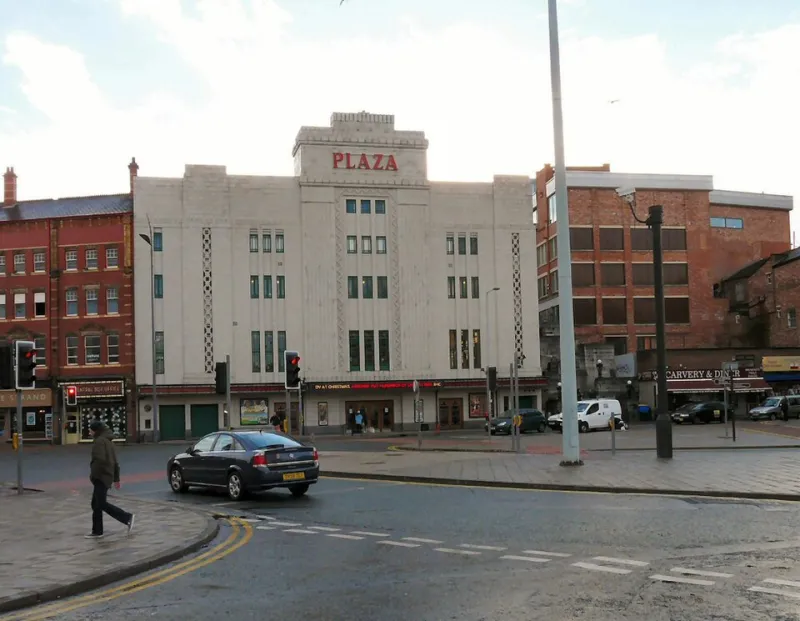
Photo: Dvortygirl, CC BY-SA 3.0, via Wikimedia Commons
Walk into a restored picturehouse and your eyes go up. Ceiling roses, plasterwork, maybe a painted dome. Then the screen. The floor is an afterthought — something to wipe your feet on. Yet some of the most interesting decisions in a cinema restoration happen at ankle height. Carpets are where a building’s past, its budget and its future audience meet.
The pattern is the point
British cinema carpets were rarely shy. In the 1930s, Art Deco houses used sunbursts, chevrons and fan motifs that carried the eye from foyer to stalls. By the 1970s, the mood had turned to saturated diamonds, interlocking squares and those brown-and-orange swirls that still split families at Sunday lunch. These were not neutral backgrounds. They were part of the show, a signal that you had left the high street and entered somewhere else.
That is why the floor matters in a restoration. A generic grey carpet can quietly undo a carefully rebuilt foyer. A busy period pattern, on the other hand, can make a room feel immediately like itself again. It also hides a multitude of sins — and a century of dropped popcorn.
Research starts with a scrap
Restorers rarely begin with a complete carpet. More often they start with a fragment: a corner lifted under a skirting board, a strip found in a cupboard, a photograph of the queue taken in 1954. Trade catalogues help. So do oral histories. In our own conversations with volunteers, we have heard people describe a carpet before they describe the seats — the colour, the pattern, the way it felt underfoot on a wet Saturday afternoon.
That memory is useful evidence. A single black-and-white photograph can establish scale and rhythm, even if the colour has to be inferred from a paint scrap or a surviving swatch. Sometimes the research turns up a manufacturer’s name, which opens another door. Occasionally it turns up nothing at all, and the team has to make an informed guess. The best restorations are honest about which is which.
Reweave, reinterpret or replace?
Commissioning a replacement is not simply a matter of sending a photo to a mill. Wool quality, pile height, backing, acoustic performance and fire regulations all shape what is possible. A pattern that worked in 1938 may need adjusting for modern underlay or access requirements. Some projects opt for a faithful reweave; others choose a contemporary interpretation that nods to the original without pretending to be it. Both approaches can be valid, but they tell different stories about what a restoration is for.
Cost is the other character in the room. A bespoke woven carpet is expensive, especially for a large auditorium. That can push a project towards a printed or stocked alternative, which may look right from the back row but feel different underfoot. There is no universal answer. What matters is that the choice is made deliberately, and that the reasoning is recorded for the next generation of caretakers.
What the floor says to an audience
A cinema carpet does quiet work. It softens sound, warms a room and guides people without signage. It also sets expectations. A floor that feels considered tells you that someone has thought about the whole visit, not just the projector. A floor that feels like a budget hotel corridor tells you something else.
In 2026, as more volunteer-led venues reopen and older sites change hands, the floor is becoming a useful test of intent. Is the aim to recreate a specific moment, or to create a pleasant modern cinema that happens to be old? Neither is wrong. But audiences notice the difference, even if they cannot say why.
Look down next time
So next time you settle into a restored picturehouse, resist the urge to look only at the screen. Look at the foyer, the stairs, the aisle. Look at the pattern under your feet. If it is bold, busy and slightly too much, it is probably doing its job. If it has been researched, remade and argued over, it is doing several jobs at once.
Cinema heritage is not only plaster and projectors. It is also the stuff we walk on — and the memories we carry of walking on it. If you have a photograph of a favourite old cinema carpet, or a memory of a pattern that has long since gone, we would love to hear it. The floor has a story too.