Ghost Schemes: How Volunteers Are Rebuilding Britain's Lost Cinema Interiors from a Shoebox of Snapshots

Photo by Photo by Maximilian Bungart on Unsplash on Unsplash
There is a particular kind of sadness that comes with an empty auditorium. Not the romantic, dust-sheet melancholy of a cinema shut for the winter, but the flatter feeling of standing in a room that has been redecorated so many times the original scheme is now pure guesswork. Cream emulsion. Magnolia. A dado rail someone thought was a good idea in the nineties. Underneath all of it, somewhere, is a wall that once knew what it was doing.
That's the problem with decoration. Structure gets saved — bricks are hard to ignore, and a leaking roof demands attention. But wallpaper is soft, cheap and endlessly replaceable, which is precisely why so little of it survived the twentieth century's enthusiasm for a fresh coat. Britain's picturehouses were repainted on a cycle, sometimes every few years, and each pass buried the last. What we have left is not the scheme that impressed the opening-night crowd. It's the ghost of it.
The evidence is thinner than you'd think
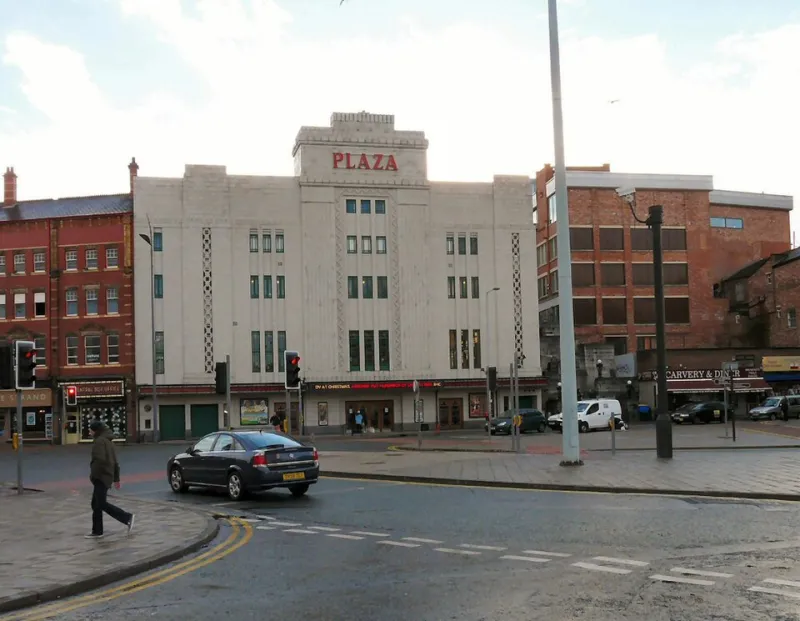
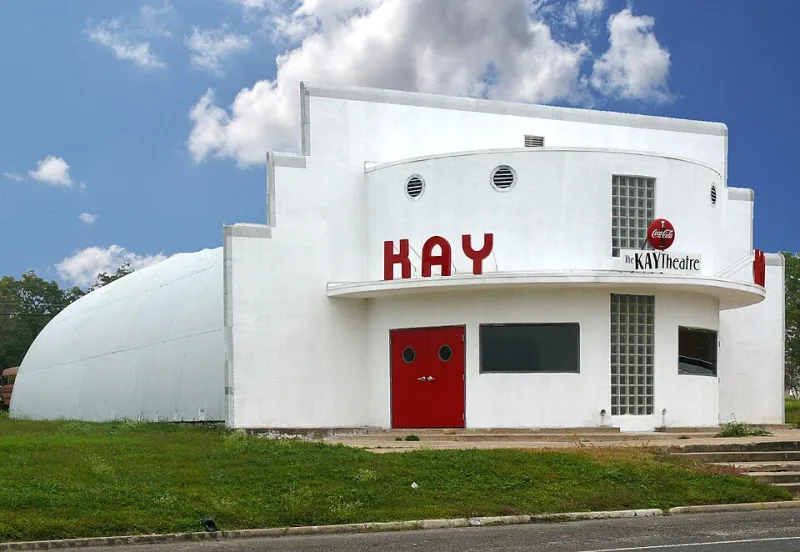
Ask anyone who has tried to pin down the original look of a suburban super cinema and you'll hear the same thing: the paperwork is patchy and the pictures are worse. Local newspapers covered the grand opening, but their photographers were interested in aldermen in chains, not in the floral frieze above the paybox. Postcards, where they exist, were usually tinted by hand and flatteringly retouched. A handful of glass plates survive in county record offices. Otherwise you're relying on a family snap taken from a bad angle in 1936, with somebody's hat obscuring the best bit.
That scarcity has turned a fairly obscure branch of research into something close to detective work. Volunteers at several restored venues have spent the past few years assembling what amounts to a fileshare of fragments — a photo here, a torn trade advertisement there — and slowly coaxing a scheme out of them. One group I spoke to described the process as 'painting by numbers where most of the numbers are missing'.
Builders' archives, trade catalogues and the paper trail
Here's where it gets genuinely interesting. Decoration left almost no mark on the buildings themselves, but it left a surprisingly rich paper trail. Decorating firms kept sample books. Plasterers ordered from catalogues that reproduced their ornamental cornices in line drawings, complete with pattern numbers. Manufacturers of wall coverings advertised their ranges in the trade press, and a few of those runs are held complete in reference libraries.
Put a 1930s catalogue page beside a grainy photograph of a foyer and you can sometimes make a match — the same repeating motif, the same scale, the same tell-tale way the pattern sat above a dado. It's not proof. It's an argument. But a careful argument, backed by an invoice or a specification in a building contract, can be enough to justify a reconstruction.
Contract documents are the real prize. Where a full specification survives, it will often name the trades, the finishes and occasionally the supplier — which is how one project discovered that its much-photographed cafe ceiling had been papered in a range the manufacturer had discontinued within four years. Nobody thought to keep a sample. Somebody did, however, keep the order book.
Reconstructing what nobody meant to lose
The volunteers doing this work tend to be careful people, and they're careful for a reason. A reconstruction is an assertion. Paint a foyer in a pattern you can only half-evidence and you've created a new 'original' that future researchers may treat as fact. That's why the better projects insist on labelling their work — discreet interpretation panels, an honest note in the guidebook — and why some are deliberately choosing a neutral, non-committal finish instead of a speculative flourish.
Others take a different view: that an informed reconstruction, clearly flagged, does more good than an empty wall. It gives visitors something to look at, and it gives the building back a bit of its personality. There's also a practical argument. A restored decorative scheme draws people into a space, and people who linger in a foyer tend to come back. Heritage needs an audience as much as it needs accuracy.
The uncomfortable question about today's schemes
There is a neat irony sitting under all this. The interiors being fitted out in 2026 — the bold colours, the patterned screens, the considered bar — will one day be somebody else's lost scheme. And we are, if anything, worse at documenting them than our predecessors were, because so much of it lives in a phone camera roll and a contractor's WhatsApp thread.
A few restoration teams have started keeping what they call a scheme file: samples of every finish, photographs taken properly with the lights on, notes on who supplied what. It's a small habit, and a cheap one, but it's the difference between a future researcher having a chance and having nothing at all.
What we owe the vanished rooms
Nobody saving a cinema in 1975 was thinking about the wallpaper. They were thinking about the roof, the seats, and whether the bingo company would renew the lease. It would be unfair to blame them. Preservation is always shaped by what feels urgent at the time, and decoration rarely feels urgent until it's gone.
But that's exactly why the photograph-hunting matters. The rooms we're trying to rebuild from snapshots aren't just pretty. They're evidence of how much care once went into a place designed for a few hours of escape — and of how casually that care was painted over. Every recovered fragment is a small correction to the record, and every honest reconstruction is a reminder that a picturehouse was never just a box with a screen in it.
If you've got a shoebox, a family album or a grandparent who photographed a foyer for no obvious reason, the people doing this work would very much like to hear from you. It's astonishing how often the missing piece turns out to be in somebody's loft.