At Ankle Height, a Small Kindness: Saving Britain’s Cinema Aisle Lights
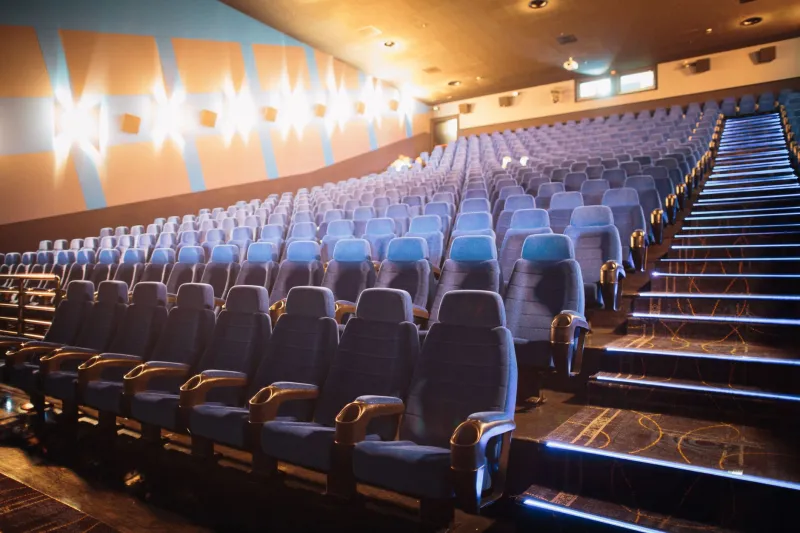
You notice them most when they are missing. In a restored picturehouse, the auditorium can be handsome, the screen bright, the seats deep and welcoming, and yet something feels wrong. The dark has become unfriendly. Nobody can see where the step is. Someone’s torch is swinging about at the front. The low, reassuring line of light that once ran along the aisle — the one that seemed to say, quietly, this way, mind your footing — has gone out.
Aisle lighting is not the stuff of grand restoration headlines. It does not have the sweep of a rebuilt balcony or the romance of a hand-painted curtain. But in Britain’s older cinemas, those little lights along the floor are part of the architecture of welcome. They are also a useful test of how carefully a building is being looked after. Anyone can make a dark room darker. Keeping it friendly takes work.
More Than a Safety Strip
The fixtures themselves are modest: small step lights set into the riser or the floor, low-wattage lamps in brass or bakelite holders, sometimes a line of tiny lenses running down the aisle like a string of beads. In older picturehouses they were often practical rather than decorative, chosen to be dim enough not to spoil the screen image and bright enough to stop a customer going over on the stairs.
But they were never only about safety. They belonged to the ritual of arrival. You came in from the foyer with your ticket, your coat and perhaps a Kia-Ora, and an usherette’s torch picked out the way. The aisle lights gave the room a shape before your eyes had adjusted. They told you where the row ended, where the step began, where the empty seat might be. In a full house, that glow was a small piece of civil engineering for the evening: a way of moving a hundred people through the dark without turning the occasion into a scramble.
That is why volunteers now spend surprising amounts of time on them. A cinema restoration that ignores aisle lighting can end up with a room that looks right in photographs and feels wrong in use. The little lights are part of the experience — not the main event, but part of the way the main event is reached.
The Volunteer With the Screwdriver
In several preservation projects, aisle lights have become a quiet specialism. Volunteers inventory what survives: the original housings, the remains of old wiring, the odd box of spare lenses in a cupboard. Some fittings can be cleaned, rewired and brought back into service. Others are too brittle, too corroded or too far from modern standards to keep as they are. The answer is usually a sympathetic replacement: a modern LED unit hidden inside an old housing, or a new fitting chosen to match the scale, colour and dimness of the original.
The work is rarely glamorous. It involves screwdrivers, continuity testers, dust, old screws that will not budge and conversations with electricians about whether a particular bit of brass is safe to reuse. Volunteers quickly learn that heritage and compliance are not enemies, but they do need to be introduced properly. A listed building or a much-loved local cinema may have original features worth keeping, but the fire officer and building control still have a say. Emergency lighting has to work when the power fails. Steps have to be visible. Cables have to be safe. Nobody wants a beautiful aisle light that becomes a hazard.
That balance is the heart of the job. Modern low-location guidance and emergency lighting can be very effective, but a cold white LED strip can look as if it belongs in an office stairwell. Volunteers and conservation-minded electricians often try warm-white lamps, diffusers, dimming and careful positioning. The aim is not to fake the past. It is to let a modern safety system sit quietly inside an old room, so that the audience notices the welcome rather than the wiring.
The Rules Are Part of the Room
It is tempting to treat safety rules as the enemy of atmosphere. In practice, they are part of what makes atmosphere possible. A cinema can only be deliciously dark if people can still find the exits. The low glow along the aisle is a compromise that has always existed: enough light to guide, not enough to distract.
In 2026, that compromise is being revisited in picturehouses across the UK. Some venues are restoring original step lights as part of wider auditorium work. Others are replacing tired fittings after fire risk assessments or accessibility reviews. The best projects bring the electrician, the conservation officer and the volunteer together early, before someone has ordered a job lot of harsh little cubes that look nothing like the room. The worst projects leave aisle lighting until the last week, then bolt on whatever is available.
There is also the question of maintenance. Old fittings need spares. Modern fittings need consistent replacements. A volunteer who photographs every surviving step light, notes its dimensions and keeps a box of matching lenses is doing real preservation work, even if it does not look like it. Future restorers will thank them.
Finding Your Seat in the Dark
Ask cinema-goers of a certain age about aisle lights and the memories often come back sideways. Not the films, but the business of getting in: the usherette’s torch beam sweeping across a row of knees, the whispered apology as you shuffled past, the moment your eyes adjusted and the room resolved itself into heads and shoulders and seats. The little lights along the floor were part of that. They made the dark feel managed.
For children, they could be strangely magical — a runway to the front row, a line of tiny landing lights in a place that felt enormous. For couples, they were the excuse to hold an arm or lean close. For anyone who has ever navigated a steep old balcony with a tub of ice cream, they were simply a mercy. Oral history projects often capture these details when they interview former staff and regulars. The grand stories matter, but so does the memory of a torch, a step and a voice saying mind your footing.
A Small Campaign Worth Lighting
Aisle lights will never draw a crowd on their own. But they are exactly the kind of detail that separates a preserved building from a working picturehouse. They are small, repetitive, easy to overlook and essential to the way a cinema feels. If you are involved with a restoration, photograph them, test them, ask what will happen to them. If you are a regular, notice them next time you find your seat. That low line of light is not just health and safety with a fitting. It is the building being kind to you in the dark.